


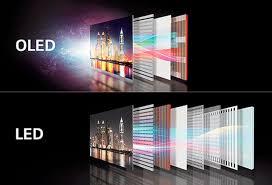
The complexity of modern display technology requires a multidisciplinary approach involving chemistry, physics, and advanced engineering. As we move away from bulky display units, the focus is on organic compounds that can emit light more efficiently while maintaining stability over thousands of hours of use. The challenge of "burn-in" in organic displays has been a major point of research, leading to the development of sophisticated software algorithms that shift pixels imperceptibly to prolong panel life. On the LED front, the transition to gallium nitride (GaN) and other advanced materials is enabling smaller, brighter, and more heat-efficient diodes. This technical evolution is critical for the development of Augmented Reality (AR) and Virtual Reality (VR) headsets, where the display must be positioned close to the eye and requires extreme precision and minimal heat generation.
Industry experts rely on detailed Led And Oled Display Market research to navigate the intellectual property landscape and identify white spaces for innovation. The race to patent new light-emitting structures and flexible substrates is intense, as these will form the foundation of future consumer electronics. Furthermore, the integration of touch sensors directly into the display stack—rather than as a separate layer—is making devices thinner and more responsive. As the Internet of Things (IoT) expands, we can expect to see small, low-power displays integrated into everything from kitchen appliances to industrial tools. These "smart surfaces" will require specialized LED and OLED solutions that can withstand varied environmental conditions while providing clear, actionable data to the user, highlighting the versatility and essential nature of this technology in a connected world.
What is the main challenge with OLED longevity and how is it being addressed? The main challenge is organic material degradation (burn-in); it is being addressed through improved chemical stability of the blue emittance and software-based pixel shifting.
How does the integration of touch sensors benefit display design? By integrating touch sensors directly into the display layers, manufacturers can create thinner, lighter devices with improved optical clarity and better touch sensitivity.
➤➤➤Explore MRFR’s Related Ongoing Coverage
Ar And Vr Smart Glasses Market

 Arabic
 French
 Spanish
 Portuguese
 Deutsch
 Turkish
 Dutch
Dutch
 Italiano
 Russian
 Romaian
 Portuguese (Brazil)
 Greek
Greek