


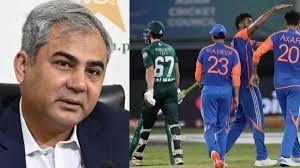
The cricketing world is currently on edge as the highly anticipated T20 World Cup 2026 fixture between India and Pakistan hangs in the balance. In a move that has sent shockwaves through the International Cricket Council (ICC), the Pakistan government has officially granted permission for the team to participate in the tournament but with a massive caveat: King Exchange 9 they are forbidden from taking the field against India.
As the February 15 clash in Colombo draws closer, two prominent voices from either side of the border have weighed in, presenting two very different versions of how this saga will end.
Ravichandran Ashwin: "The Match Will Happen, 100 Percent"
Former Indian spinner Ravichandran Ashwin, known for his analytical approach to the game, isn't buying the boycott threat. Speaking on his YouTube channel, Ashwin predicted that the Pakistan Cricket Board (PCB) would eventually "backtrack."
Ashwin’s Key Points:
-
The Business of Cricket: Ashwin pointed out that an India-Pakistan match is a commercial juggernaut. Broadcasters stand to lose hundreds of millions of dollars if the game is cancelled, which would lead to immense pressure from other ICC member nations who share that revenue.
-
Sanctions and Isolation: He warned that a forfeit could lead to severe consequences, including the possibility of international players being denied NOCs (No Objection Certificates) to play in the Pakistan Super League (PSL).
-
A Question of Logic: Ashwin noted that since the match is already at a neutral venue (Colombo), there is no security or travel-based logic for a boycott. "To say I will not play against a particular opponent is just not acceptable," he remarked.
Kamran Akmal: "PCB Shouldn't Back Down"
On the other side, former Pakistan wicketkeeper Kamran Akmal has become a vocal supporter of the boycott. Akmal’s stance is rooted in what he perceives as a lack of respect and "double standards" by the ICC.
Akmal’s Key Points:
-
The Hybrid Model Precedent: Akmal questioned where the ICC's "sanctity of the schedule" was when India refused to travel to Pakistan for the Champions Trophy and the Asia Cup, forcing a hybrid model.
-
Dignity Over Points: He referred to the 2025 Asia Cup, alleging that Indian players disrespected the PCB by refusing to shake hands or accept the trophy from Chairman Mohsin Naqvi.
-
Call for Consistency: His message to the PCB is firm: "Was the ICC sleeping when India said it would not play the Champions Trophy in Pakistan? The PCB's decision should be respected just as we respected India's decision."
What’s At Stake?
If Pakistan follows through with the government's directive and skips the February 15 match:
-
Points Forfeit: India will be awarded two points automatically.
-
NRR Hit: Pakistan’s Net Run Rate will take a massive hit, as they will be recorded as having scored zero runs in 20 overs.
-
Financial Fallout: Estimates suggest a loss of nearly $250 million for stakeholders and broadcasters.
-
ICC Sanctions: The ICC has already issued a stern warning, hinting at "long-term implications" that could include financial penalties or even suspension.
The Verdict: A Game of Poker
Currently, it’s a high-stakes game of political and sporting poker. While the Pakistan government has drawn a line in the sand to protest the ICC's treatment of Bangladesh (who were replaced by Scotland after refusing to travel to India), the reality of the global cricket economy favors Ashwin’s prediction.
Will "better sense prevail" as Ashwin hopes, or will the PCB stick to its guns as Akmal urges? One thing is certain: the eyes of the world are on Colombo, waiting to see if the greatest rivalry in sports actually takes the field.

 English
 Arabic
 Spanish
 Portuguese
 Deutsch
 Turkish
 Dutch
Dutch
 Italiano
 Russian
 Romaian
 Portuguese (Brazil)
 Greek
Greek